
Publications
Books
Book chapters
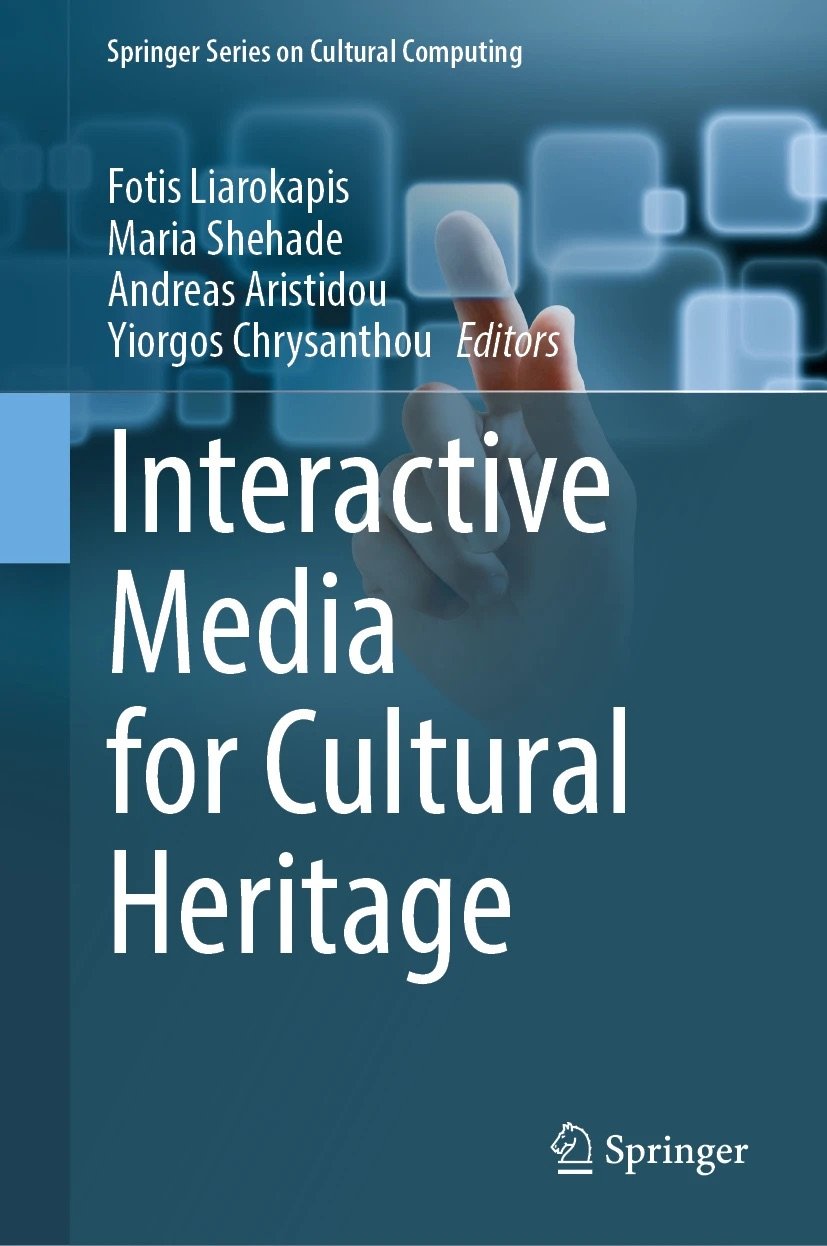
- Shehade, M., Stylianou-Lambert, T., Kyriakou, P., Frangoudis, F., Pavlou, M. Papadas, S. and Neocleous, K., (forthcoming, 2024), Delving into Fairy Tales: Designing for digital interactions in a children’s museum. In: Liarokapis, F. Shehade, M., Aristidou A. Chrysanthou Y., (eds), Interactive media for cultural heritage, Springer.
Authors: Shehade, M., Stylianou-Lambert, T., Kyriakou, P., Frangoudis, F., Pavlou, M. Papadas, S. and Neocleous, K.
Abstract: With the rapid advancement of technology, children’s museums have integrated interactive installations to engage young visitors in immersive and ed-ucational experiences. The advantages of interactive installations lie in their abil-ity to cater to different learning styles and enhance children’s engagement with educational content. However, it is important to acknowledge the limitations and challenges that such interactive technologies can have in these settings. This chapter explores the design of two interactive installations in a children’s mu-seum, examining the advantages that can be achieved and also the challenges and limitations that can be addressed through a well-thought-out design process. By focusing on fairy tale museums, and through a real case example, the chapter explores how interactive technologies can foster fantasy, imagination and allow children to be transported in magic worlds. The chapter explores and analyses specific design considerations and principles that can be applied in order to har-ness the advantages of interactive installations while addressing their limitations and explains how these were applied in a fairy tale museum in Cyprus.
Publication Date: forthcoming 2024
- Papapetrou, A., Frangoudes, F., Polydorou, A., Papadas, S., Shehade, M., Kyriakou, N. and Neokleous, N. (forthcoming, 2024), ReInHeriting cultural heritage spaces: Two case studies for using interactive media applications in immersive performance design and practice. In: Liarokapis, F. Shehade, M., Aristidou A. Chrysanthou Y., (eds), Interactive media for cultural heritage, Springer.
Authors: Papapetrou, A., Frangoudes, F., Polydorou, A., Papadas, S., Shehade, M., Kyriakou, N. and Neokleous, N.
Abstract: Two interdisciplinary immersive performances were organised within the framework of ReInHerit, funded by Horizon 2020 (https://www.reinherit.eu), which is an international project focused on promoting a digital ecosystem connecting cultural heritage collections and sites, in order to present Europe’s tangible and intangible heritage to citizens and tourists in its wider historical and geographical contexts. The immersive performances will provide a template for collaborations for developing similar projects, which are shaped by cultural heritage sites and will in turn help to attract wider audiences to them. These were planned, developed and realised in parallel to the setup of a digital platform, in which all key stakeholders (museums, cultural heritage sites, policy makers, professionals and communities) have an open and collaborative space to experiment, share, cocreate and innovate. A diverse group of professionals joined forces to create this project, resulting in two interdisciplinary performances that invited audiences to take initiative in shaping their experience of them.
Publication Date: Forthcoming 2024
- Heraclidou A & Stylianou-Lambert T. “Photographic Representations of Colonial Cyprus and the Ledra Palace Hotel” in Maria Hadjiathanasiou, Andreas Karyos, Emilios A. Solomou (eds) Cyprus: A Cultural History, 1878-1960, London: I.B. Tauris (2023)
Authors: Theopisti Stylianou-Lambert and Antigone Heraclidou
Abstract: This chapter explores the colonial history of a well-known, albeit overlooked building in the buffer zone in Cyprus: the Ledra Palace Hotel, an emblematic building with historical significance. From its establishment in 1949 until the end of the colonial period in Cyprus, it played a pivotal role in the development of a cosmopolitan and multicultural urban society in Cyprus. It also played an important role in the development of Cypriot art as it served as a main exhibition space. The chapter is divided into two main sections: The first section gives a brief history of the hotel and examines how and to what extend the hotel reflects the history of Cyprus, with a focus on the colonial period. The second section explores the way Cyprus was photographically represented during the colonial period from 1950-1960 – at the time the Ledra Palace hotel was at its prime. Cyprus at the time was mostly portrayed as a rural, romantic and relatively backward place. Indeed, travelling artists and writers, used to cast Cyprus as a primitive, premodern society, for the tendency was, for Cypriot modernity to be ignored. While ethnography, tourism and art excluded signs of modernity and focused on a rural and “authentic” image of Cyprus, everyday photography where Cypriots had control over the production of representations of the self, emphasized modernity. Indeed, the Ledra Palace of the 1950s splendidly depicts a modern image of the Cypriot society: one where ballroom dances, tea parties, art exhibitions, fashion shows, concerts academic lectures, business conferences and of course wedding parties were taking place.
Publication status: Accepted for publication – Forthcoming 2024
- Stylianou-Lambert, T. & Achilleos, A. (forthcoming, 2024). “The Archive of Unnamed Workers”. In Wooldridge, D. & Rajguru, R. (Eds.) Routledge Companion to Global Photographies, London, New York: Routledge.
- Stylianou-Lambert (2024). “Selecting Methodologies and Methods – Research Currents Interview: Theopisti Stylianou-Lambert”. In Love, A. R. & Randolph, D. (eds) An Introductory Guide to Qualitative Research in Art Museums. London, New York: Routledge, pp. 51-67.
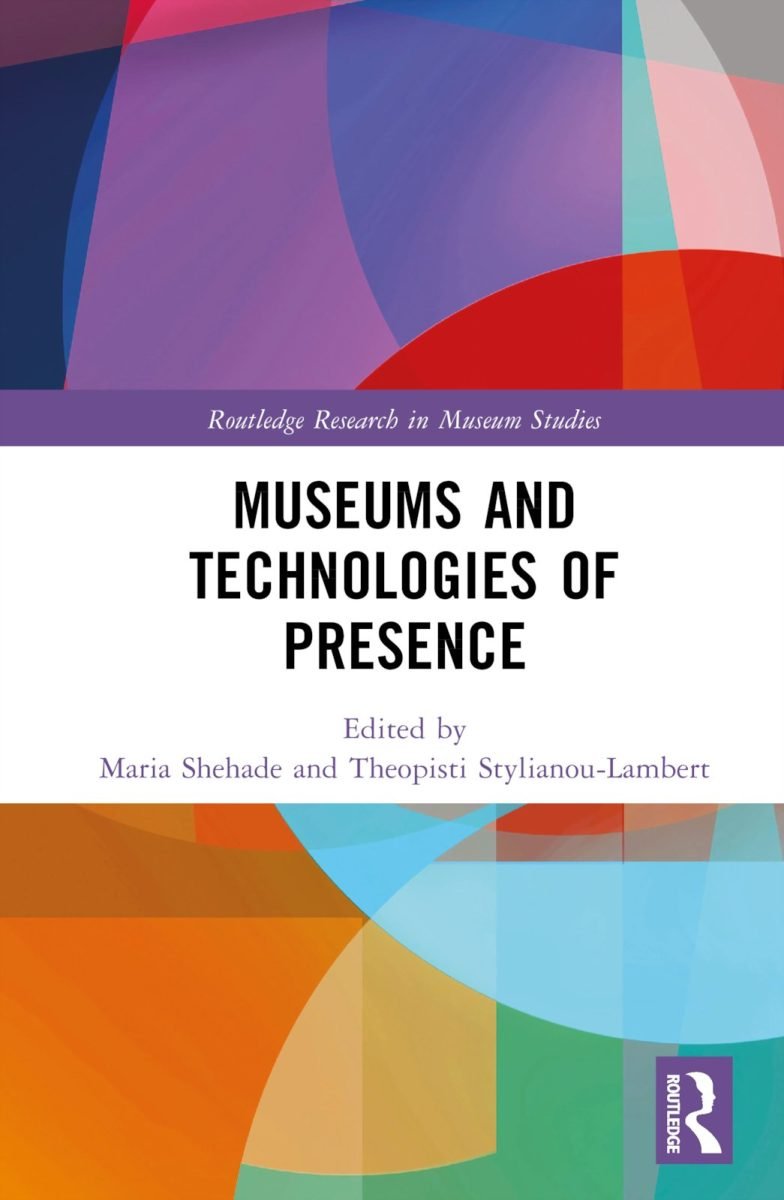
- Shehade, M. and Stylianou-Lambert, T (2023), Presence, Museums and Immersive Technologies: An interdisciplinary exploration, in: Shehade, M. and Stylianou-Lambert, T., Eds. Museums and Technologies of Presence, Routledge, pp.9-29 .
Authors: Maria Shehade and Theopisti Stylianou-Lambert
Abstract: Recently there has been a re-articulation of the concept of presence, which has evolved into an important trend in the humanities. Despite the many cross-disciplinary endeavours to define what ‘presence’ is, it proves a rather elusive concept, with different conceptualisations of the term found across different disciplines.
In museum studies, presence is associated with the type of experience a visitor can have in a museum setting, in an attempt to find the balance between interpretation/meaning and embodiment/immersion in the museum space. The rapid advancement of technology and the turn towards immersive experiences in museums, however, has raised a set of new questions regarding the effects of technology on presence. The aim of this chapter is to provide a multidisciplinary discussion of the concept of presence and critically explore the different approaches to it to pinpoint the limitations and gaps in existing literature. The chapter explores the dichotomy between presence and meaning effects and the application of presence in museum environments with an emphasis on embodiment, affect, and atmosphere. It also investigates how presence is defined and studied in computer science. The ultimate aim of this chapter is to provide the theoretical basis for the exploration of the potential role of technologies as facilitators of presence in museums.
Available in Open Access: https://www.taylorfrancis.com/chapters/oa-edit/10.4324/9781003334316-2/presence-museums-immersive-technologies-maria-shehade-theopisti-stylianou-lambert?context=ubx&refId=91eeed39-0ac7-42c7-b183-3729c4e7a485
Publication Date: 2023
- Stylianou-Lambert, T., Morris, C., Papantoniou, G. & Heraclidou, A. (2023). “Aphrodite’s Sisters”. In Bonaci, G. S. & Petroni, N. (eds) APS Mdina Cathedral Contemporary Art Biennale: Mediterranean Goddesses. Mdina: Mdina Biennale.
- Aristidou, M.; Stylianou-Lambert, T.; Neokleous, K. (2023) Curating the Future: Artists and other interdisciplinary contributors in media art as archivists. RE:SOURCE –10th International Conference on the Histories of Media Art, Science and Technology Proceedings [Forthcoming]
- Hovadik, J.; Aristidou, M.(2023) Cyprus Vital Signs – A journey to enchantment. RE:SOURCE –10th International Conference on the Histories of Media Art, Science and Technology Proceedings [Forthcoming]
- Aristidou, M.; Stylianou-Lambert, T.; Neokleous, K.; Yiakoupi, K. (2023) Curating the Future: Artists and other interdisciplinary contributors in media art as archivists. ISEA 2023 Conference Proceedings
- Stylianou-Lambert, T. (2022). Tourists Photographic Self-representations. In D. Buhalis (ed), Encyclopedia of Tourism Management and Marketing. Edward Elgar Publishing Ltd, pp.513-516.
Publication on: 25 Aug 2022
- Shehade, M. (2022). Developing international cultural relations through the negotiation of cultural property disputes: A sustainability perspective. In: Fouseki, K., Cassar M., Dreyfuss G. and Kah Eng K. (eds), Routledge Handbook on Sustainable Heritage. Routledge, UK, pp.169-180
Author: Maria Shehade
Abstract: A critical issue faced by many countries is the request for the return of cultural artefacts to their countries of origin. Such claims are pursued either through litigation or through alternative processes, with negotiation gaining more ground in recent years. Such negotiation initiatives, resulting in restitution agreements, could offer many advantages to the involved parties apart from resolving the dispute in question, such as the development and establishment of long-term international cultural relations (ICR) between the involved parties, which can constitute the basis for developing close ties in many other areas of interest.
This chapter aims to explore the potential of negotiated restitution agreements for establishing ICR, through the example of the Getty–Italy restitution agreement signed in 2007 and its aftermath. The chapter also highlights the potential that such resolution processes may have in the economic development of the involved parties, the physical sustainability and preservation of the contested heritage, the development of tourism initiatives, and the involvement of all interested stakeholders and the preconditions for achieving such benefits. Current research agendas on the interconnection of such negotiation initiatives with cultural diplomacy and soft power are also discussed, emphasising the major impact that negotiated restitution agreements can have on several sustainable development goals.
Published on: 2022
- Heraclidou, A. & Stylianou-Lambert, T. (2022). The Ledra Palace Hotel and the ‘difficult history’ of modern Cyprus. Byzantine and Modern Greek Studies. 47(1), 103-122.
- Bounia, A., Nicolaou, P. & Stylianou-Lambert, T. (2021). Contested perceptions of Archaeological Sites in Cyprus: Communities and their Claims on their Past. In E. Solomon, Contested Antiquity: Archaeological Heritage and Social Conflict in Modern Greece and Cyprus”. Bloomington, Indiana: Indiana University Press, pp. 108-130.
Authors: Alexandra Bounia, Polina Nikolaou, Theopisti Stylianoy-Lambert
Publication Date: 2021
- Shehade, M. & Stylianou-Lambert, T. (2021). Η Εικονική Πραγματικότητα μέσα απο τα μάτια των επαγγελματιών του μουσείου: Πλεονεκτήματα, προκλήσεις και προοπτικές (Virtual reality through the eyes of museum professionals: advantages, challenges and prospects) [in Greek]. In: Bounia, A. & Catapoti, D. (eds.), Αναδυόμενες Τεχνολογίες και Πολιτιστική Κληρονομιά (Emerging Technologies and Cultural Heritage) [in Greek]. Alexandreia Publishing, pp. 129-150
Authors: Maria Shehade and Theopisti Stylianou-Lambert
Publication Date: 2021
- Shehade, M. (2021). Τα μάρμαρα και οι «άλλοι»: Ο επαναπατρισμός αρχαιοτήτων ως βασική έκφανση της ελληνικής πολιτιστικής διπλωματίας (The marbles and the ‘others’: Antiquities repatriation as a basic aspect of Greek cultural diplomacy). In: Kizlari, D. and Shehade, M. (eds).Ελληνική Πολιτιστική Διπλωματία Σύγχρονες Προσεγγίσεις – Μελλοντικές Προκλήσεις (Greek Cultural Diplomacy: Current Approaches- Future Challenges) [in Greek]. Epikentro Publishing, pp.123-140
Authors: Maria Shehade
Publication date: 2021
- Kizlari, D. and Shehade, M. (2021). Βασικές έννοιες της πολιτιστικής διπλωματίας και χαρτογράφηση της ελληνικής πραγματικότητας (Basic concepts of cultural diplomacy and mapping of the Greek reality). [in Greek] In: Kizlari, D. and Shehade, M. (eds). Ελληνική Πολιτιστική Διπλωματία Σύγχρονες Προσεγγίσεις – Μελλοντικές Προκλήσεις (Greek Cultural Diplomacy: Current Approaches- Future Challenges) [in Greek]. Epikentro Publishing, pp.17-36
Authors: Dimitra Kizlari and Maria Shehade
Publication Date: 2021
- Heraclidou, A., (2021) Mirroring History in Ledra Palace Hotel. In: Stylianou-Lambert Theopisti, Loizou-Hadjigavriel Loukia and Heraclidou Antigone (eds), Ledra Palace Hotel: Dancing on the line/ Λήδρα Πάλας: Χορεύοντας σε μια γραμμή
Authors: Antigone Heraclidou
Published Date: 2021
- Aristidou, M.; Stylianou-Lambert, T. (2021) From the artist’s perspective: on the longevity of VR/AR artworks. in Art, Museums and Digital Cultures →Rethinking Change. IHA/NOVA FCSH & maat. ISBN: 978-989-54405-4-2 Add to Citavi project by ISBN Add to Citavi project by ISBN
- Shehade, M. & Stylianou-Lambert, T. (2020). Exploring the challenges of interactive technologies in museum spaces. Proceedings of the conference “Free and Open Source Technologies, Arts and Commoning Practices: An Unconference about Art, Design, Technology, Making, Cities and their Communities.” pp. 103-109. (ISBN 978-9963-711-88-8)
Authors: Maria Shehade and Theopisti Stylianou-Lambert
Published Date: 2020
- Heraclidou H. and Stylianou-Lambert T. (2020) Dealing with Difficult history: the ‘Ledra Palace’ project. Proceedings of the conference “Free and Open Source Technologies, Arts and Commoning Practices: An Unconference about Art, Design, Technology, Making, Cities and their Communities.”
Authors: Heraclidou H. and Stylianou-Lambert T
Published Date: 2020
- Shehade, M. & Stylianou-Lambert, T. (2019). The Future of Technology in Museums. In Smeds, K. (Ed.). The Future of Tradition in Museology: Materials for a discussion (pp.153-158). Paris: ICOFOM
Authors: Maria Shehade and Theopisti Stylianou-Lambert
Publication Date: 2019
Papers
- Shehade, M. (accepted, forthcoming, 2024). Enhancing Cultural Heritage Tourism in Rural Areas through Augmented Reality: A Case Study from Cyprus. In Katsoni V. (Ed.), “Innovation and Creativity in Tourism, Business and Social Sciences”, Proceedings of the 11th International IACuDiT Conference, Naxos 2024, Springer.
Author: Maria Shehade
Abstract: Augmented Reality (AR) opened new avenues in cultural heritage tourism, particularly in enhancing the visibility of underexplored areas. The aim of this paper is to discuss the potential of this technology for the promotion of cultural heritage for the touristic development of rural areas, aiming to drive sustainable tourism development. By providing an immersive and interactive experience, AR technology can bridge the gap between the past and present, making heritage more engaging to a broader audience, adding elements of gamification and edutainment. The paper presents a case study of an AR application designed specifically for the Cyprus Deputy Ministry of Tourism, showcasing how digital overlays can enhance visitors’ understanding and appreciation of cultural heritage through digital storytelling. The paper presents the conceptual and creative processes involved, including the integration of historical data, the conceptual gamification elements, and the incorporation of historical elements for the promotion of local traditions, products and other characteristics. It seeks to demonstrate how AR can be combined with gamification and digital storytelling to further support sustainable tourism development in rural areas through more interactive and engaging applications, offering valuable insights for future initiatives in this field.
Publication date: accepted, forthcoming, 2024
- Special issue “Expanded Visualities: Photography and Emerging Technologies”. Philosophy of Photography
Editors: Theopisti Stylianou-Lambert, Kleanthis Neocleous & Andrew Fisher.
Published on: 2024
- Aristidou, M. & Stylianou-Lambert, T. (2024). VR/AR artworks in the museum: redefining preservation through collaboration, Convergence.0(0), p.1-12.
- Stylianou-Lambert, T. & Widmaier, L. (Eds.) (2023). Special Issue with title “Everyday Photography and Mourning in the 21st Century”. Photographies, 16(1).
- Stylianou-Lambert, T. & Widmaier, L. (2023). Editorial: Everyday photography and mourning in the 21st century. Photographies, 16(1), 3-18.
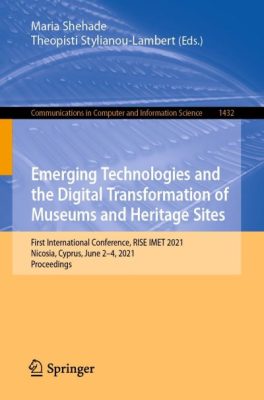
- The Ledra Palace project: Using emerging technologies to communicate exhibition content- Evaluation of results, RISE -IMET Proceedings, IEEE. In: Liarokapis F. and Shehade, M. (eds), Proceedings of the 2022 International Conference on Interactive Media, Smart Systems and Emerging Technologies (IMET)
Authors: Antigone Heraclidou, Christos I. Ioannou, Fotos Frangoudes, Panayiotis Kyriacou, Savvas Avraam, Kleanthis Neokleous, Marios Avraamides and Theopisti Stylianou-Lambert
Abstract: During the past couple of decades, museums resort to using innovative technological solutions in their permanent collections or temporary exhibitions aiming to enhance visitor experience. In the current study, we tested three emerging technologies (i.e., Interactive Book, Interactive Table, Immersive Virtual Reality) that were created to show in a museum exhibition, content related to ‘difficult heritage’ and ‘difficult history’. In a questionnaire administrated at the end of the exhibition, visitors were first asked to evaluate whether the content of the exhibition was better communicated through these interactive technologies than through non-technological (conventional) installations, and then to assess the usability of these technologies. Results revealed that technological installations were as engaging and successful in the presentation and communication of the content of the exhibition as the non-technological installations. Finally, with respect to the usability of the above three technological installations, results were remarkably high (Mdn: 87), with all visitors reporting a clear preference for the immersive virtual reality installation. Studies such as the current one support that interactive technologies should not aim to substitute conventional installations but instead, to complement them to enhance visitor experience and provide alternative ways of engagement and content communication.
Publication Date: 2022
- Heraclidou, A & Stylianou-Lambert, T, The Ledra Palace Hotel and the ‘difficult history’ of modern Cyprus, Byzantine and Modern Greek Studies.
Authors: Antigone Heraclidou and Theopisti Stylianou-Lambert
Abstract: This paper explores the extent to which the recent turbulent history of Cyprus is reflected on an emblematic building, the Ledra Palace Hotel, which is situated on Nicosia’s buffer zone, the Green Line that, since 1964, divides the island in two sectors, the Greek Cypriot, and the Turkish Cypriot. Since its establishment in 1949 the Ledra Palace has been the background of the country’s key historical events. In this paper, the Ledra Palace is analysed as an integral part of Cyprus’s cultural heritage and as such it contributes to the understanding and negotiation of the island’s difficult past.
Publication status: 2022
- Stylianou-Lambert, T. & Panayides, O. (2021). Tracking the Loving Gaze. Leonardo (MIT Press). 54(5), 493–499.
Authors: Theopisti Stylianou-Lambert & Omiros Panayides
Abstract: Tracking the Loving Gaze is a futile attempt to follow, map and capture the way cherished personal photographs are viewed. The authors asked 30 people to look at a preselected photograph that held a special meaning for them, while using an eye tracker. The raw visual data from this process—heat maps, focus maps and scan paths—became the foundation of a body of work that includes darkroom prints, short videos and a limited-edition artist book. Apart from exploring the invisible viewing processes of personal photography, this article introduces the concepts of the detached and the invested viewer, as well as the corresponding concepts of the cold and the loving gaze.
Publication on: 2021
- Heraclidou, A. “Reducing the gap: Girls’ and women’s education in colonial Cyprus, 1878-1960”, CAHIERS DU CENTRE D’ÉTUDES CHYPRIOTES, NO 51, 2021
Authors: Antigone Heraclidou
Abstract: As was the case in many countries around the world, in Cyprus, up until the first decades of the 20th century, universal – and surely compulsory – education was not a given right but, rather, a privilege. When the British arrived on the island, in 1878, the illiteracy rate exceeded 75 percent while, among the female population, the percentage was a shocking 97.5 percent. During British rule, girls and women were to benefit significantly from the Government’s education decisions; these decisions reduced the gap between boys’ and girls’ school attendance, a tendency that continued after the island’s independence. This paper focuses mostly on the Greek-Cypriot community, although frequent references to the Turkish-Cypriot and other communities are made throughout the text; the entire subject is approached mainly from a historical, rather than an educational, perspective.
Publication on: 2021
- Shehade, M. & Stylianou-Lambert, T. (2020). Revisiting Authenticity in the Age of the Digital Transformation of Cultural Tourism. In Katsoni V. & Spyriadis (Eds.), “Cultural and Tourism Innovation in the Digital Era”, Proceedings of the 6th International IACuDiT Conference, Athens 2019, pp.3-16. Springer.
Authors: Maria Shehade and Theopisti Stylianou-Lambert
Abstract: The recent years have seen a digital transformation of the cultural tourism sector and the interpretation of cultural heritage, through the use of emerging and immersive technologies, such as Virtual Reality (VR) and Augmented Reality (AR). Although this transformation has brought important advantages, it may also challenge the authenticity of the offered experience. This paper aims to explore the different and conflicting scholarly debates on authenticity and technology, which lie at the intersection of three fields, namely tourism studies, heritage studies and ICT and which may also have consequences on the actual applicability of such technologies in cultural tourism. An examination of the concept of authenticity in the aforementioned disciplines is provided, through an analysis of how the concept has evolved in each of the three disciplines. The paper also highlights their differences and points of convergence and discusses the challenges and implications created by the identified discrepancies between the different stakeholders involved in cultural tourism. Finally suggestions will be offered on how the discussed challenges and implications can be addressed in light of the new needs of cultural tourism in the digital era.
Publication Date: 2020
- Stylianou-Lambert, T. & Bounia, A. (2020). “Cultural ‘wars’, religious artefacts and visitors”. In T. Kruse, H. Faustmann & S. Rogge (eds.), When the Cemetery Becomes Political – Dealing with the Religious Heritage in Multi-ethnic Regions. Münster, New York: Waxman, pp. 132-154.
Authors: Stylianou-Lambert, T. & Bounia, A.
Publication date: 2020
- Shehade, M. & Stylianou-Lambert, T. (2020). Virtual Reality in Museums: Exploring the Experiences of Museum Professionals. Applied Sciences 10(11), 4031.
Authors: Shehade Maria, Theopisti Stylianou-Lambert
Abstract: The past few years have seen an increase in the use of virtual reality (VR) in museum environments in an attempt for museums to embrace technological innovations and adapt to the challenges of the digital era. While there are studies that examine the advantages of VR in museums and visitors’ experiences with it, there are no studies examining the experiences of museum professionals who are responsible for a museum’s objects and narratives. The aim of this paper is to explore the practices, experiences, and perceptions of museum professionals on the use of VR technology in museums, their perceived advantages and challenges of such technologies, and their vision for the future of technology in museums. The paper provides an in-depth analysis of interviews with museum professionals from a number of countries around the world who worked with particular VR projects in their own institutions. The ultimate aim is to offer a more critical and holistic examination and assessment of the use of VR in museums and provide suggestions for designing and developing VR projects in the future.
Available in Open access: https://www.mdpi.com/2076-3417/10/11/4031
Publication date: 2020
- Stylianou-Lambert, T. (2019). “Tourists with Cameras: Reproducing or Producing?” In Wells, L. (Ed.). The Photography Cultures Reader: Representation, Agency and Identity. London, New York: Routledge, pp. 90-109.
Author: Stylianou-Lambert, T.
Abstract: This paper examines tourists’ photographic representations and processes in order to engage with the multidisciplinary literature that views tourists with cameras as either passive consumers of places or, alternatively, as active cultural producers. Specifically, this research examines tourists’ photographic performances at the Rock of Aphrodite, the legendary birthplace of the Greek goddess in Cyprus, as well as whether or not tourists perpetuate, with their own photographs, images found on postcards. It is argued that even though tourists are active participants in the photographic process and produce photographs that have highly personal meanings, their photographs are still shaped by larger conventions such as the cultural construction of places, structural factors, sets of social and visual conventions as well as photographic etiquette.
Publication date: 2019
- Stylianou-Lambert, Theopisti. “Photographic ecosystems and archives.” photographies 12.3 (2019): 375-394.
Authors: Theopisti Stylianou-Lambert
Abstract: This article offers a theoretical framework for understanding the social structures embedded in photographic archives. More specifically, it examines the ways in which archives, with their multiple physical and online presences, function within various photographic ecosystems. I propose that there exist at least three different but interconnected types of archive biographies — social, material and value biographies — and argue that these biographies may change over time, in the hands of different individuals, and when shifting from one ecosystem to another. Furthermore, not all images in a specific ecosystem are equal, as some will have a more active social life and thus are more dominant. As a case study, I use the photographic archive of the Stiftung Hans Arp und Sophie Taeuber-Arp e.V. in Berlin, Germany, which houses the personal photographs of artists Hans Arp (1886–1966) and Sophie Taeuber-Arp (1889–1943).
Publication Date: 2019